A signature is worth exactly what it is worth in court.
Most electronic signatures are evidence you have to defend. A qualified one is evidence the other side has to attack, because the law starts from the assumption that it is valid.
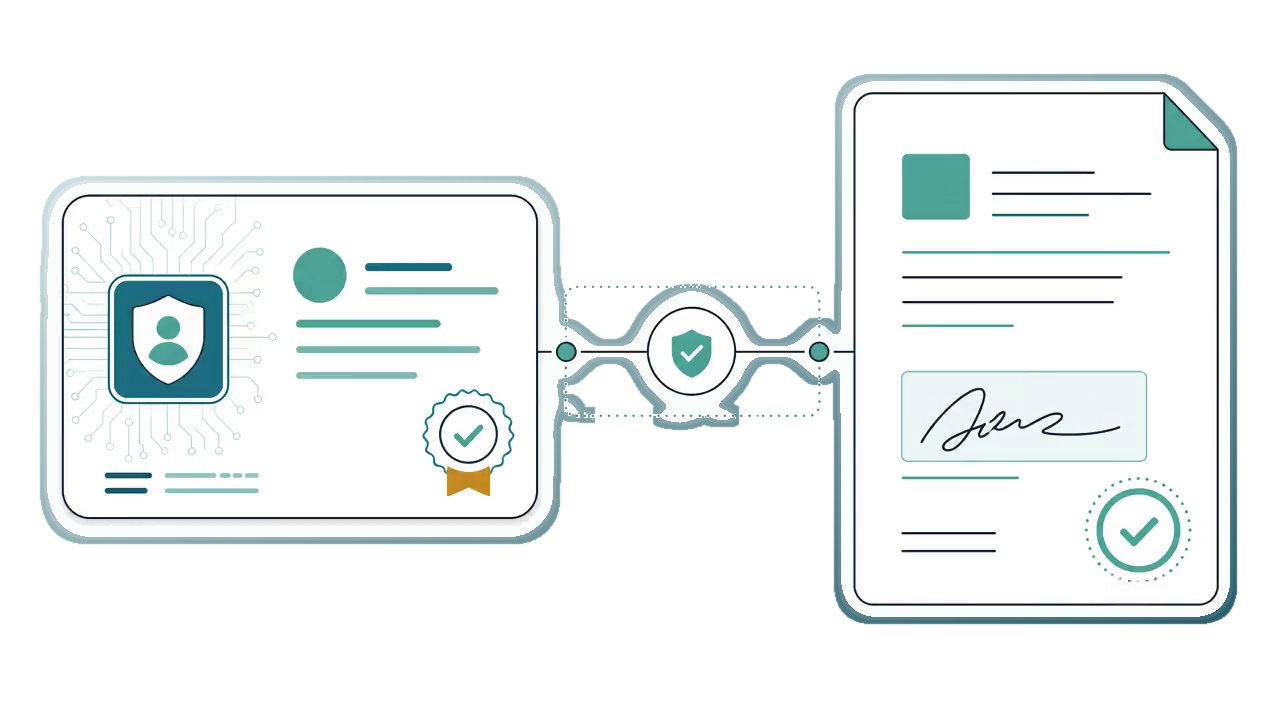
Not "can we sign electronically".
Not "can we sign electronically". Everyone can. It is what happens if this contract is challenged in four years, and whether the signature carries the argument or you do.
How it works.
A qualified signature requires the signer's identity established to a defined standard.
- Identify: document and chip, a bank identity, or a government eID, whichever exists for this person in this country.
- Issue: a qualified certificate for this signing.
- Sign: the document is signed and sealed in a long-term archival format.
- Reuse: the established identity signs again later without repeating the identification.
Coverage.
Qualified signatures recognised across the EU with cross-border effect, plus the Swiss framework. Country-specific requirements are handled per market, because several member states added their own conditions on top of the European baseline.
A signature that fails a challenge is not a technical problem.
A signature that fails a challenge is not a technical problem. It is an unenforceable contract, discovered at the moment it mattered, on the one file you needed it for.
Built to be configured, not locked in.
Assurance level per document type, decided by rules. Qualified on a mortgage, simple on a delivery note, and not decided by whoever built that screen.
Two audiences.
A qualified signature is the one that still holds if the deal is challenged years later.
A long-term archive and a trail showing who signed, when, at what assurance level, and on what evidence.
Why us.
The identity that was established signs the agreement itself, so the signature carries the assurance level it needed from the start.