An address is the only identity attribute that is wrong by accident more often than on purpose.
People move, buildings get renumbered, and every form invites a typo. Most bad addresses in your database are not fraud. They are entropy, and they cost the same.
Not "is this a valid address".
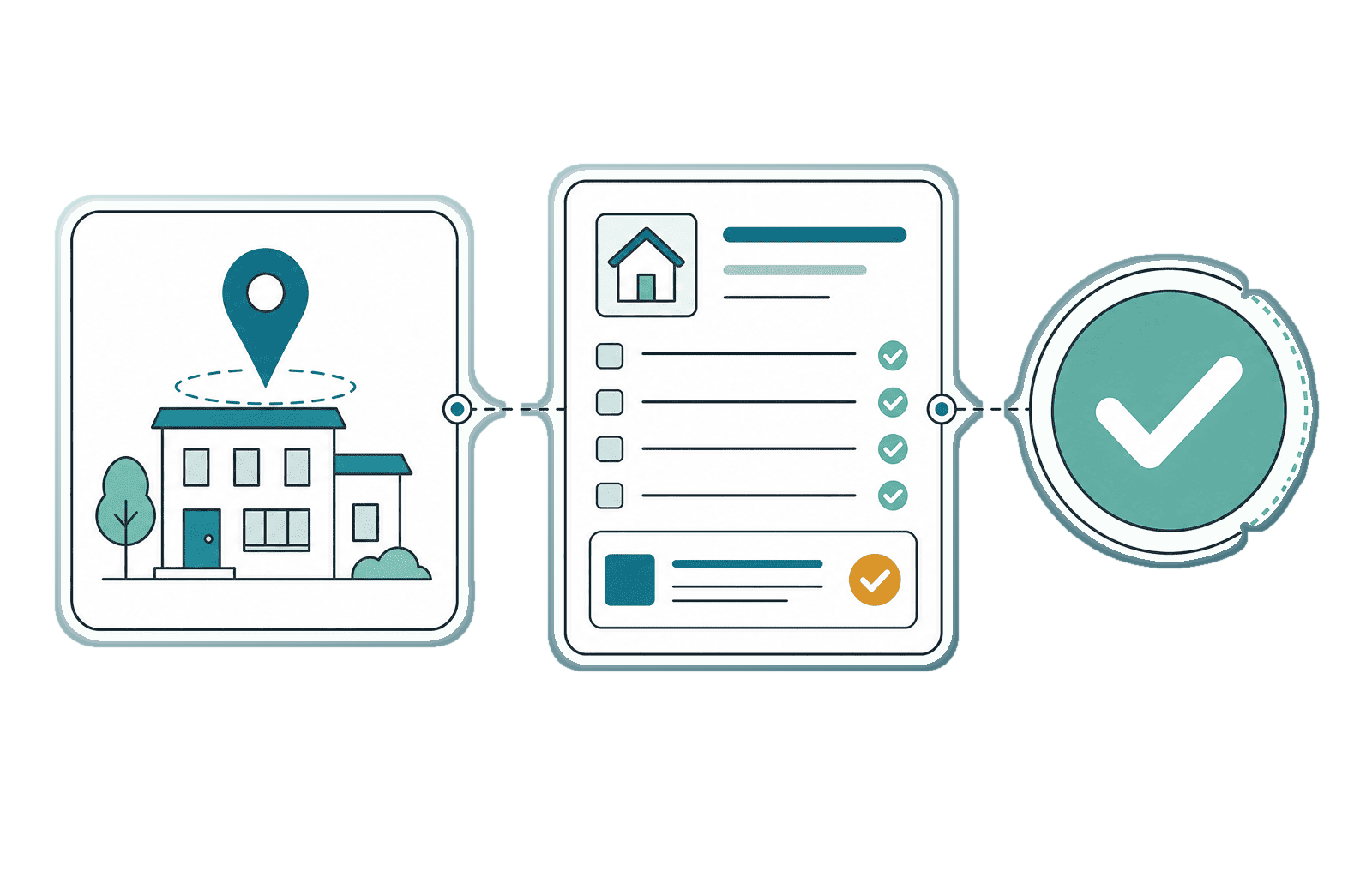
Not "is this a valid address". It is does this person live at this address, which is a different question and the one that matters for compliance. Which of the two you can actually answer depends on which source you asked, and a tool that asks one source will answer both anyway.
How it works.
Formats normalised to the local standard, so records are comparable across countries.
Does this address exist and is it deliverable.
Is this person associated with it, from postal, official and private sources.
Type-ahead capture, so the address is right when it is typed rather than corrected afterwards.
Where somebody has moved, relocation and deceased data resolves what the old address no longer answers.
Where the wired sources no longer place a person at all, open-source and licensed research to establish a current address for a subject whose file has gone stale. It is a research step with a human-readable result, not another lookup.
Four questions, one field.
An address check that asks one source and returns one score is answering whichever question that source happens to be good at, and not telling you which one. The honest design asks several, keeps their answers apart, and lets your risk policy decide which combination it needs rather than inheriting a vendor's default blend.
| Source | What it answers | When the answer updates | Where it is thin |
|---|---|---|---|
| Postal and civil registry data | Does this address exist, and is it a place something can be delivered to. | On the registry's own official update cycle. | Where registries are not digitised, and on the person-to-address question, which a postal file was never built to answer. |
| Credit bureau records | Is this person associated with this address through a financial history. | When there is credit activity to record. | Where credit markets are thin, or where the applicant has no history: the young, the newly arrived, the deliberately unbanked. |
| Utility and telco service records | Is there an active service running in this person's name at this address. | As services are opened, closed or transferred. | An active service can indicate someone is using the address; it does not confirm who lives there today. On what is licensable, which is market by market. |
| The address the bank holds | What address this person's own bank has on file for them, read over the open banking connection. | Whatever the bank currently holds, read live over the connection. | It needs the customer to connect an account, so it is there when they consent and absent when they do not. |
| Relocation and deceased records | Has this person moved or died since the address on file was captured. | A point-in-time flag rather than a continuous watch. | It answers one question and is not a general-purpose source. It tells you the old answer is stale, not what the new answer is. |
None of these is the best source. Each is the best source for one question, which is why the answer is a combination configured per market rather than a single provider's verdict.
Coverage.
Address verification in 50 countries.
A wrong address is a failed delivery, a returned card, a compliance record that does not hold, and a customer who is annoyed about something they may not have caused.
A wrong address is a failed delivery, a returned card, a compliance record that does not hold, and a customer who is annoyed about something they may not have caused. Under AML rules it is also a verification you claimed to have performed against a fact that was not true. Each of those four failures traces back to which source was asked and what it was good for, not to "the address field".
Built to be configured, not locked in.
Validate at entry, verify at onboarding, or both. Reject, correct silently, or ask, per market. Which sources are asked, and what combination counts as verified, is set the same way.
Two audiences.
Address errors surface as four different problems, delivery, credit, AML, onboarding, each traced back to the same bad field.
What was submitted, what it resolved to, and how confident the match is.
Why us.
Address is the least glamorous data product and one of the most load-bearing. It sits underneath identity verification, delivery, credit and AML at once, which means its errors surface as four different problems that nobody traces back to the address.